
Liquidity in the banking system has slipped into a deficit for the first time in three weeks, prompting banks to borrow the largest quantum of funds from the Reserve Bank of India (RBI) in around a month and a half. The key catalyst for the sudden tightening in liquidity was due to outflows on account of advance tax payments, which occur towards the end of a quarter. Analysts also cited other factors such as a currency leakage and possible interventions by the RBI in the foreign exchange market, which contributed to the tighter liquidity conditions.
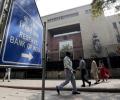
However, RBI would continue to nudge banks to cut lending rates

'We have a plan to plough back a 'This year in the first half we had profits of more than Rs 31,000 crore.' significant amount of profits this financial year.' 'We have seen this organic plough back of profit is one of best ways to support the equity of the bank.'
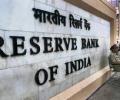
CPI inflation slowed to 9.39% in April compared with 10.39% in March.

Bajaj Finance was the top gainer in the Sensex pack, rising around 4 per cent, followed by Maruti, SBI, Bajaj Finserv, Sun Pharma and Asian Paints. NSE Nifty rallied 293.05 points to 17,469.75.

The public sector banks are not in a position to cut rates because of their weak balance sheets and massive portfolios of non-performing assets, says Devangshu Datta.

India's GDP is estimated to grow at 7.4 per cent in the financial year 2022-23 with rising prices triggered by the Russia-Ukraine conflict posing as the biggest challenge to the global economic recovery, Ficci's Economic Outlook Survey released on Sunday said. According to the survey, the Reserve Bank of India (RBI) is likely to start a rate hike cycle in the second half of 2022, while a repo rate hike of 50-75 bps is expected by the end of the current fiscal. The RBI is expected to continue supporting the ongoing economic recovery by keeping the repo rate unchanged in its April policy review, the survey said.

'There are some high-frequency indicators where uptick is visible and some where it is not'

With no rate cuts on the table, the other monetary policy alternative could be to reduce the width of the asymmetric policy corridor or increase in reverse repo rate when the pandemic subsides, they opined.

Flush with liquidity, banks are eager to lend. And, therein lies the problem, warns Tamal Bandyopadhyay.

'People know if inflation is not within the tolerance band, then action will be taken so they do not expect inflation to rise above that.'

"We will raise Rs 300 crore via bonds of two-, three- and five-year tenures. This will be our maiden bond issuance and is part of our effort to widen funding sources," says Vimal Bhandari, executive vice-chairman and chief executive officer (CEO), Arka Fincap. The firm, a subsidiary of Kirloskar Oil, is only five years old and small (assets of around Rs 5,000 crore with an "AA" rating), but the response to this float will be closely watched: It would be the first by a non-banking finance company (NBFC) after Mint Road upped the risk weights on bank exposures to them by 25 percentage points. The move by the Reserve Bank of India (RBI) has caught NBFCs off guard even though the issue had been flagged by Governor Shaktikanta Das with their corner-room occupants (and that of banks) in July and August 2023 - on consumer credit and the dependency on bank borrowings.

The government plans to bring down its stake to 26 per cent in these two banks, which are yet to be identified. This may not come in the way of getting investors for these banks, provided the government is willing to step back rather than run them the way it had been doing for over five decades since these banks were nationalised, points out Tamal Bandyopadhyay.

Retail investors may safely invest in shorter-duration funds, suggests Sanjay Kumar Singh.

A bleak demand outlook for steel in the domestic as well as global market is also another reason Tata Steel may be looking to have additional liquidity as margins are expected to take a hit in the coming quarters.

The RBI has targeted 6 per cent inflation by January and 4 per cent by March 2018.

To the extent that monetary variables affect investment, the weather, thus, looks far less clement.

'The variables to watch include the monsoon, resolution of NBFC liquidity issues, GST collections, and NPA resolution.'

The bond market is not in a mood to reason with the Reserve Bank of India (RBI) on keeping yields low. The 10-year bond yields continued to rise for the fourth straight session to close at 6.202 per cent from its previous close of 6.135 per cent. The yield was at 6 per cent a week ago. The RBI wants the yields to remain at 6 per cent, but bond dealers say the central bank will have to step up its bond-buying programme.

The RBI expects change, presumably commencing in the next Budget, but must hold its current view until this actually happens.

The current slowdown has lasted for over 18 months and is the longest incident of sluggishness since 2006.

Budget was a mild disappointment. Yet, the bull run continues.

'As the growth momentum reverses benefiting from re-monetisation, it will be accompanied by a rise in inflation.'

Will demonetisation lead to a rate cut, leading to higher quantum of lending?

We still have time for this government to take action.
